Showing posts with label Friends. Show all posts

Wednesday, February 10, 2016

Umbrellas In the Snow


A Wintry Day (1900) (Courtesy of Library of Congress)


Sharing an umbrella is symbolic of weathering the storms of life together, and is a popular theme of  paintings and postcards to illustrate love and friendship. Here are some beautiful examples:


Couple Under Umbrella In the Snow by Suzuki Haronobu (1725-1770) (Japanese Ukiyo-e Print, Courtesy of Library of Congress)


Postcard (1913) Courtesy of tuckdb.org


Postcard (1904) Courtesy of tuckdb.org


Postcard (1912) Courtesy of tuckdb.org


Postcard (Circa 1910s) Courtesy of tuckdb.org


Postcard (1901) Courtesy of tuckdb.org


Postcard (1908) Courtesy of tuckdb.org


Christmas Postcard (1911) Courtesy of tuckdb.org


Christmas Postcard 1904 Courtesy of tuckdb.org


New Year's Postcard (1912) Courtesy of tuckdb.org


Valentine's Day Postcard (1906) Courtesy of tuckdb.org

Sunday, January 24, 2016

Afternoon Tea

Photo by Agnes Liinnea source


Harper's Bazar (now known as Harper's Bazaar) debuted in 1867. It was one of America's first fashion magazines, read by women in the middle and upper classes, and it still exists today.  In the early 20th century, it showcased the latest fashions from Europe, and also contained household hints, short fiction, travel articles, and other features of interest to its audience. The following article, which appeared in 1903, details how a lady could entertain her friends with an afternoon tea, including what to serve and how to decorate. The illustrations are from various late 19th and early 20th century sources.


A tea may be one of the most delightful and informal affairs in the whole social round, or it may be an unmitigated bore. It all depends upon the hostess. If she is a wise woman she will limit her guests to the number her house can accommodate with ease, and have her hours long enough to avoid all coming at the same time; she will have some regard to making her guests acquainted if they have not already met; and she will furnish her table so invitingly that those who come perfunctorily will remain to chat over the teacups , and pay her the compliment of forgetting the time of day.


Postcard Image (1912) (Courtesy of tuckdb.org)

     
On a cold winter's afternoon, a bright open fire is one of the things to have, if possible, and near enough to it to look cozy should stand the prettiest of tea tables; not one of the small affairs which will hold only a half-dozen cups, but a good-sized one capable of practical service. In the centre should be a bowl of flowers, and about it two candelabra or several individual candlesticks with or without shades. Scattered between will be room for plates of sandwiches, cakes, bonbons, and salted nuts or crystallized fruits, while at one side the tea or coffee urn may stand, or the chocolate-pot, and at the other side may be a large punch-bowl of lemonade or tea punch....


From Mrs. Beeton's Book of Household Management (1909)


If one plans to have tea, chocolate, and lemonade for beverages, she must consider how easily she can handle them. Tea made with a kettle of boiling water and a tea-ball is all very well for three or four persons, but one cannot serve more without a delay while the water slowly comes to the boiling-point. The urn is the best thing to use...Have the tea made in the kitchen and carefully strained; then put it in the urn and light the lamp, and it will keep fresh for hours.


Five Girls Taking Tea (1906) (Courtesy of  tuckdb.org)


Have cream, sugar, and sliced lemons on the table, and, if you fancy a novelty, try putting two cloves in each cup and pouring the hot tea upon them, removing them before passing the cup.... If you are so fortunate as to own a Russian samovar, and it certainly gives the best tea in the world, do not use cups at all, but tall, slender glasses...and put a slice of lemon in each glass.


Samovars (photo by Olechka) source

Chocolate-pots to-day are of quite a new shape, resembling vases or urns, and the cups which are used with them do not have the straight sides they formerly had, but flare at the top somewhat as the teacups do. Of course when chocolate is offered at a tea, whipped cream is put on it when served.


The Chocolate and Tea Cups Which Are Now Used (from Harper's Bazar, Feb. 1903)


Breakfast and Tea China From Mrs. Beeton's Book of Household Management (1909)


When the lemonade is made, shredded oranges, bananas, and pineapple may be used, but it is to be strained before it is put in the bowl, and a few maraschino or preserved cherries added. A small ladle is used for filling the glass cups which invariably accompany a punch bowl. Tea punch is made by using hot tea instead of water for lemonade, adding the fruits as before, but putting it, when ice-cold, into a glass pitcher instead of a bowl, and placing a large bunch of sugared mint in the mouth. Cafe frappe is a strong coffee, well sweetened, and with a good deal of cream which is frozen to the consistency of wet snow. It is served from the bowl in glasses.


Refreshments by Harrison Fisher (circa 1912) source


The sandwiches offered at teas are of infinite variety; sometimes they are filled with a salad mixture, sometimes with a sweet, and often with some sort of nuts with cream or fruit. They are cut in circles or triangles or hearts, or else rolled. To make salad sandwiches, chop and pound chicken or turkey to a paste, and mix with mayonnaise, or spread crisp lettuce leaves with mayonnaise and put between the slices. Olives, chopped very fine, make an excellent salad sandwich, either plain or, like the others, with a dressing. Delicious sandwiches are made by using the very thinnest possible shavings of lemon, and cucumbers with French dressing are also appetizing, provided not too much of the rather strongly flavored vegetable is used.


Sandwiches From Mrs. Beeton's Book of Household Management (1909)


Sweet sandwiches are made of orange marmalade, or pear conserve, which is a rich jam with considerable ginger cooked in it. Jelly is sometimes used, but it is not sufficiently stiff to be practical; jam or marmalade is far better. Peach or apricot is most delicate; red raspberry is occasionally seen, but the seeds are decidedly objectionable. Besides these two kinds of sandwiches there are many prepared with nuts which are also very nice. Boston brown bread two days old, cut very thin, spread first with a little butter and then with cream cheese mixed with chopped peanuts is one of the best of sandwiches, but care must be taken not to have the bread damp or soggy. Whole-wheat bread may be prepared with this same filling. Raisins and chopped English walnuts are nice, and so are chopped dates and almonds together. Often whipped cream is used with these nut fillings, to bind them.


Afternoon Tea by Kate Greenaway (1880)

The cake served at afternoon tea should always be of the lightest sort. It is never wise to offer any sort of layer or fruit cake, or anything which is sticky. There are all kinds of wafers and nut strips which are easily prepared at home which are delicious, and certainly far more tempting than the ordinary things bought from the baker. Strips of puff paste may be covered with chopped almonds mixed with the slightly beaten white of one egg, and just browned in the oven. Lady-fingers may be rolled in boiled frosting and allowed to dry. Saltines may be covered with sweet, melted chocolate, with a very little butter mixed in. Or little cakes may be made in small baking-dishes, the smaller the better, and rolled in boiled icing colored and flavored with orange, rose, lemon, or pistache (pistachio), and these may be ornamented, if desired, with tiny strips of angelica, or bits of candied cherries or nuts cut in lengths.


How To Make Pastry From Mrs. Beeton's Book of Household Management (1909)
 

Ice-cream sandwiches are new, but many are afraid to attempt them, as they seem difficult to manage; they are very simple, on the contrary. Get white ice cream in bricks, as firmly packaged as possible, and slice it on a marble slab,--an old fashioned table or bureau top is just the thing; then with a round biscuit-cutter cut out circles from the slices, and put them between macaroons. Or cut the slices in strips of the right size to fit between two sugar wafers. Serve these sandwiches on small plates with forks.


Over the Teacups by Clarence Underwood (1908) source


The bonbons used at afternoon teas may be all chocolates, or else peppermints or creams, matching the flowers in color, or they may be delicious confections in paper cases, such as marrons glaces or strips of orange and lemon, candied, but in any case they should be something dainty, and if possible, something not seen on every table. If salted nuts are used, try having them pecans instead of almonds, and mix a few green pistache nuts with them; the contrast is pretty, and almonds have been used so long as to be tiresome....

By Josphine Grenier, from Harper's Bazar, February 1903


From Home Made Candy Recipes by Mrs. Janet McKenzie Hill (circa 1900)

Sunday, January 17, 2016

The Dirty Windows

Photo by Kay Isabedra (Courtesy of  deathtothestockphoto.com)

This past week, everybody in America was playing the lottery. The Powerball jackpot was at a record breaking amount of over 1 Billion dollars, and we were all dreaming of the wonderful things we would do if we won. 

But there are numerous stories of people who have won the lottery, and didn't live happily ever after. Some have even said that it was the worst thing that ever happened to them. The money disappeared after being spent on mostly useless things, or people were taken advantage of, and relationships dissolved. 

Of course we need enough money to live and be comfortable, but having lots of money does not lead automatically to happiness. So much of what happens to us is based more on our perceptions of things than on external circumstances. Some people move through what seem to be difficult circumstances with grace, and remain grateful for what they have. Other people seem to have everything on the surface, but are only able to see what they don't have, and don't enjoy their lives or use their talents.  

One sure way to ruin potential happiness is to worry incessantly, and it's difficult not to do that. It's easy to become isolated and overcome by our fears. So when a friend comes along to help, and offers us a fresh perspective, we have the choice to open ourselves to the light, and to new possibilities, or we can stay stuck in the darkness of self-defeating thoughts and behaviors.

The following is a slightly modernized adaptation of a story called "The Windows", which is from a book called The Golden Windows: A Book of Fables for Young and Old, by Laura E. Richards, first published in 1903. 

The Dirty Windows
     
      A man who lived alone was sitting in his room one day, thinking gloomy thoughts.
     “I cannot see as well as I used to,” he said to himself. “I can hardly see to do my work anymore.  It’s evident that my sight is failing. I will probably be blind before long, and unable to do any work! And then I will have to starve to death, or go live in a shelter to survive. Perhaps it would be better for me to go there now, while I can still see a little.”
     Just then his neighbor, who was an emotional, energetic woman, came over to visit.
     “Why do you just sit here, withering away?” she asked, with concern.
     So the man told her his thoughts: how his vision was failing and he how he would soon have to starve to death or go to live in a shelter. And while he was talking, she bustled about the room, filling a bucket of water, and rummaging through the drawers of his dresser to find a clean cloth.
     When he had finished talking, she said; “Look! Your windows are dirty; that’s all that’s wrong.” And she cheerfully washed the windows. “There!” she said, and went about her business, hoping that she was leaving him in a better state than she had found him.
     But with the windows clean, the man was even more upset than before. “Oh no,” he thought to himself, “how this glare hurts my eyes! My eyes must be weaker than I thought!” And he shut the curtains in despair.

--By Susan Sherwood, (Adapted from The Golden Windows by Laura E. Richards, 1903)
 

Friday, January 8, 2016

A Warm Place

Photo Courtesy of splitshire.com

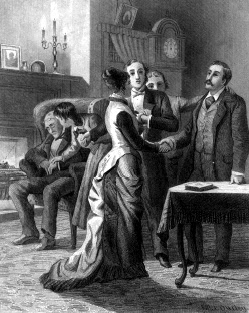
An evening of sweet contentment at the end of a busy week...a golden place outside of time where worries and concerns melt away, and friends are truly happy in each others company. Sometimes we try too hard to create these special moments. The magical times in life that we always remember often come when we least expect them. The following passage is a remembrance of a warm, happy get together with a group of seemingly random friends almost 100 years ago, on a rainy night in California....


Roses and Rain

     Last night we sat in the quiet room--a few friends together--and heard the wind rattling the palm leaves outside in the garden, like some ghostly senorita clicking a pair of invisible castanets in tune to some haunting rhythm.
     The fire burned on the hearth, a fire of eucalyptus logs, with now and then a branch of aromatic leaves, flaming suddenly into leaping life and filling the room with their pungent and somehow exotic perfume.
     We put out the bright lights from the center of the room, and let the shadows fall from the little gleaming lamps that are like fire-flies, flitting in the dusk like so many swiftly passing thoughts and pleasant memories.
     There we were, the young couple so dead in love with each other, and so full of the joy of living. Sweet Sixteen, a little terrified at her vague glimpse of life—Twenty-one, virile and modest and somehow eagerly hopeful.
     The Home Woman, the Woman of the World, the Artist, the Genius, the Singer and the Priest. A strange company, strangely mixed, and yet there we sat in the quiet little room—together, like passengers on a raft picked up from the wild sea and held together by some strange accident of fate.
     We talked, not of politics, not of war or of diplomacy—not even of the high cost of living, or of the effect of the vote upon women.
     We talked of books and poetry, and of music, and one told a quaint little story of a wounded pigeon, and the rescue of it, and the fire burned and the wind sang, and gradually the stress of the world and the anxiety and restless, uneasy ambition of it fell from us like an outworn cloak. And there we were, like little children, talking together in the twilight of some great primeval forest.
     And one sang—a simple song of love and memory and tears.
     “Roses and rain” and the Artist smiled, and the Woman of the World sighed, and there were tears in the eyes of the Home Woman.
     The Genius it was who sang—and the Singer sat by the fire and listened.
     The Young Wife’s hand stole to the hand of her Husband, and the Priest sat like one in a deep reverie. Was he thinking of the roses that bloomed in the dooryard of his home across the sea, and the fragrance of them in the sweet June rain?
     And we didn’t care who was elected or who was defeated, and somewhere, far down in the city below, the (news) boys were calling “extra, extra, extra!”—all about something or other very important, which concerned us not in the very least.
     And the Singer was generous, and poured out for us like a libation on the altar of friendship his voice of molten silver—French songs he sang full of the quick and glancing grace of a fountain leaping in the moonlight. German lieder, simple and brooding, like the lullabies a mother sings to her child. Italian, too, he sang, and the room glowed with the fire and the passion of the melting music of Italy.
     “Eileen Allana”—how he sang it—the simple old ballad, and how we drank every lilting note of it, like thirsty travelers in a dry and arid desert.
     And so the quiet evening spent itself, and at the end she sang again, the woman with the strange dark eyes—“Roses and Rain”—and we were one with the sunshine and the dew and knew again the sweet and rapturous pang of youth and moonlight and the mystery of the stars.
     “Roses and Rain”—the wind in the palm trees, the fire on the hearth, dear faces in the soft dimness of the quiet room. What is there sweeter, what more beautiful, what more to be gained in life than these?
 --from Roses and Rain by Annie Laurie (1920)


Illustration from Godey's Lady's Magazine, January 1880

Thursday, January 7, 2016

Letting In the Light

Photo Courtesy of Cali www.pixabay.com

Venetian Blinds

Late in the afternoon, when the sun makes its way into my study through the wide western windows, I sometimes pull a cord which closes the Venetian blinds and shuts out the sunlight, either completely or partially, depending upon my wishes and whims at the moment.

Of course, in keeping out the sun, I also intercept my view of the outside world, so that I cannot perceive what transpires beyond the thin panels of the blinds.

A certain man closed the shutters around himself, refusing to let the world into the inner sanctum of his own life. He became cynical, grouchy, anti-social and cantankerous. For a time those who knew him attempted to make their way in around the barriers, but after suffering rebuffs, they left him to his self-desired role of a recluse. With the years, his face became harder and more deeply lined with hatred for his fellow men. Then, at length, he committed suicide, leaving a note in which he complained of the injustice and unkindness of mankind. In pulling the blinds against others, he dwarfed his own soul. 

You cannot close the shutters without making the room darker.

Neither can you build around yourself a fence to keep others out, except you make your own soul smaller and your life an emptiness. For a man to have friends, he must himself be friendly.
--by Leo Bennett, from Sunshine Magazine, December 1961

Monday, January 4, 2016

Reading Together


Reading Couple (1877) by Pierre-Auguste Renoir (1841-1919)  www.wikiart.org


Reading Aloud

A very pleasant habit for home life is that of reading aloud some pleasant book in the evenings, and if the selection of the book is wise it certainly makes the home circle very attractive, and lightens the drudgery of the mother, who often sits after tea with her basket of stockings to be darned and who has a dreary time if each member of the family, who does not go out, takes his or her paper or book, as I have often seen, and subsides into their own interesting reading, leaving her to her own meditations. A book read aloud at home gets a charm, apart from itself sometimes; its very name will conjure up in our memories scenes in the far past— the pleasant family circle, then, perhaps, unbroken, the cheerful fireside, and frequently, too, the comments upon what is being read which add to the interest, and give a newer insight. The same association applies to a piece of work which is in operation while any book is being read.
--Ladies Fancy Work,  Edited by Jenny June, 1886


Mrs. Cassatt Reading to Her Grandchildren (1880) by Mary Cassatt (1824-1926)   www.wikiart.org


Times change, technology changes, but people don't change very much. In the 19th century, people often became isolated in their own reading or needlework, instead of interacting with each other. Today, we have more distractions--television, computers, tablets, smartphones, gaming systems. Couples, families, and groups of friends spend much of their time in the same room, but at a distance. Often people will find themselves sitting across the table from each other texting messages instead of talking. While quiet time alone is still important, and keeping up with social media has become essential in our world, it's important not to forget to share special times with the people in our lives, and to be present in the moment. Reading aloud together is a different way to experience a book, and is enjoyable for adults, as well as children. It can spark conversation, and give new perspectives and ideas. Reading aloud also creates vivid memories--not just of the story that is being read, but of a cozy, pleasant, unique place and time, and of the people who were present there, in that moment, with us.


Theodore Gerard (1824-1895)